


image

100

YRS

of matching people to attorneys

98

%

lawyers listed are verified

10

M

monthly visit our network

100

+

practice areas covered.

Our Top Rated Lawyers

Popular Exclusive Listings In Our Directory
Lawrence Glosser
Ad

4.5

86 East Pine Street, Seattle, WA, United States

Practice Areas :

Legendary sushi maestro in your town
Andre Olivie
Ad

5.0

3571 Broad St, Chamblee, GA 30341, USA

Practice Areas :

We exist to reduce the inconvenience
Mindy Carr
Ad

4.7

New York Avenue Northwest, Washington, DC, United States

Practice Areas :

A Window of art Spreading Love

How it Works

It’s easy to find and book a lawyer and also to share your experience.
Find Your Lawyer

Find Your Lawyer

Sed ut perspiciatis unde omnis iste natus error sit v oluptatem accusantium or sit

Book a Lawyer

Book a Lawyer

Sed ut perspiciatis unde omnis iste natus error sit v oluptatem accusantium or sit

Review A Lawyer

Review A Lawyer

Sed ut perspiciatis unde omnis iste natus error sit v oluptatem accusantium or sit

Browse Attorneys

Find your attorney by different types

Serving Around the Globe

Watch Actual People from worldwide are talking about our firm

nyayseva_y0yzjb
nyayseva_y0yzjb
nyayseva_y0yzjb
nyayseva_y0yzjb
nyayseva_y0yzjb
nyayseva_y0yzjb
nyayseva_y0yzjb

From Our Blogs

See Services In These Cities
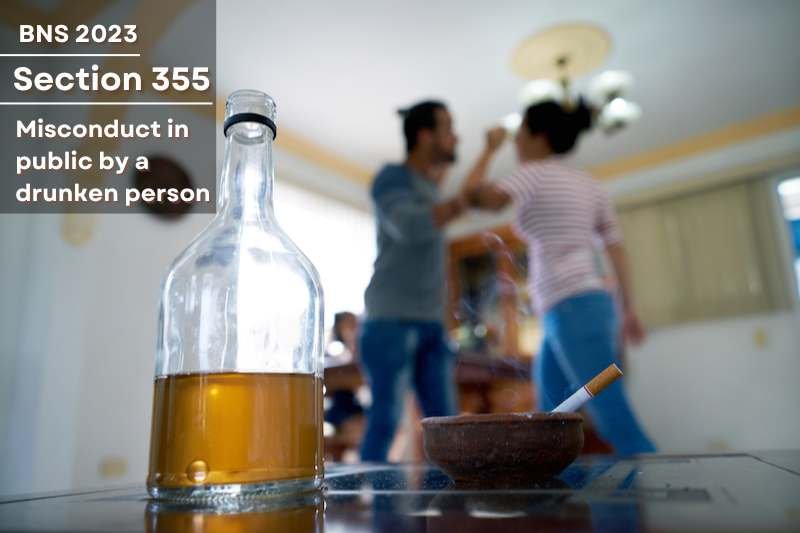
BNS Section 355 Misconduct in Public by a Drunken Person Explained
Adv.Chetna Agrawal

BNS Section 355 Misconduct in Public by a Drunken Person Explained

With the enactment of the Bharatiya Nyaya Sanhita, 2023 (BNS), several provisions from the Indian Penal Code, 1860 have been revised and reorganized to reflect contemporary standards of justice and public order. One such provision is BNS Section 355, which addresses misconduct in public spaces by intoxicated individuals. Statutory Provision: BNS Section 355 Section 355 of the Bharatiya Nyaya Sanhita, 2023 states: “Whoever, in a state of intoxication, appears in any public place or behaves in a disorderly or indecent manner, shall be punished with simple imprisonment for a term which may extend to twenty-four hours, or with fine which may extend to two hundred rupees, or with both.” This section essentially replaces the erstwhile Section 510 of the Indian Penal Code, offering clearer language and a more streamlined structure. Essential Ingredients For an offence under BNS Section 355 to be made out, the following elements must be established: The person must be under the influence of alcohol or any intoxicating substance. The act must occur in a public place. The individual must exhibit disorderly or indecent behavior. Each of these components is essential. The mere fact of being intoxicated in a public place does not constitute an offence unless accompanied by inappropriate conduct. Nature of Offence Classification: Non-cognizable and bailable Triable by: Any Magistrate Maximum Punishment: Simple imprisonment for 24 hours or fine up to ₹200 or both The classification as a non-cognizable offence ensures that police action is regulated and subject to procedural safeguards, while the bailable nature of the offence reflects its relatively minor gravity. Objective and Rationale The legislative intent behind Section 355 is to maintain public decency, peace, and order. Public intoxication that results in harassment, nuisance, or a breach of peace poses a threat to communal harmony and safety, particularly in densely populated areas. By enabling swift punitive action with limited judicial involvement, this provision seeks to deter minor but disruptive behavior without overburdening the criminal justice system. Judicial Interpretation and Case Law of BNS Section 355 1. Prakash v. State of Maharashtra (2022) Facts: The accused was found in an inebriated state on a suburban train, shouting at passengers and obstructing railway staff.Held: The Bombay High Court held that public intoxication leading to disruption in transport systems warranted penal action. The court upheld the accused’s brief detention and fine under the old IPC provision, which aligns with BNS Section 355 in spirit. 2. Ramesh Singh v. State of U.P. (2024) Facts: The petitioner, under the influence of alcohol, was seen engaging in obscene dance on a public street during a Holi procession.Held: The court emphasized that festive occasions do not create exceptions to public conduct norms. The behavior constituted indecency and justified fine under applicable laws. These cases underscore the judiciary’s recognition of public order as paramount, particularly when individual behavior, under intoxication, disturbs the peace or dignity of others. Comparison with IPC Section 510 CriteriaIPC Section 510BNS Section 355LanguageArchaic and broadClear and specificFine₹10₹200ImprisonmentUp to 24 hoursUp to 24 hoursFocusGeneral misconduct while drunkSpecific focus on public place and indecent or disorderly behavior The revised provision under the BNS reflects an updated socio-legal approach, addressing gaps in interpretation and enforcement. Scope and Limitations of BNS Section 355 Scope: Applicable to conduct in public places (streets, transport, markets, etc.) Targets visible, offensive behavior that disturbs peace or causes discomfort Limitations: Does not criminalize private drinking Misuse by authorities remains a concern; arrests must be based on observable misconduct, not mere suspicion of intoxication The law must not be used to target individuals based on appearance or social status. Enforcement requires a measured and lawful approach to avoid abuse of power. Law Enforcement and Procedural Aspects Although non-cognizable, police officers are permitted to act under summary trial procedures, particularly when immediate action is required to restore order. In many instances, individuals may be released after payment of fine or warned, depending on the nature and gravity of misconduct. Judicial discretion plays a key role in ensuring proportionate punishment. Short Note on BNS Section 355 Name of the Offence: Misconduct in public by a drunken person Legal Provision: Section 355, Bharatiya Nyaya Sanhita, 2023 Punishment: Simple imprisonment up to 24 hours, or fine up to ₹200, or both Nature: Non-cognizable, bailable, triable by any Magistrate Purpose: To penalize minor but disruptive behavior in public caused by intoxication Conclusion BNS Section 355 Misconduct in public by a drunken person is a pragmatic legal tool designed to uphold public decorum and prevent disorder arising from drunken behavior in public. Its introduction within the Bharatiya Nyaya Sanhita represents a step forward in harmonizing penal provisions with modern urban realities. While the offence is minor, the legal consequences act as a deterrent against public indecency and nuisance. However, the application of this provision must be guided by fairness, due process, and discretion, ensuring that it is not misused for moral policing or harassment. As India modernizes its criminal law framework, such provisions serve as instruments of balanced justice, offering both deterrence and procedural economy. Disclaimer This article is intended for informational and academic purposes only. It does not constitute legal advice or opinion. Readers are advised to consult a licensed legal practitioner for case-specific guidance or representation.
BNS Section 354: Coercion Through Divine Displeasure Explained with Case Laws
Amit Malik

BNS Section 354: Coercion Through Divine Displeasure Explained with Case Laws

The Bharatiya Nyaya Sanhita, 2023 (BNS) marks a significant shift in India’s criminal justice framework by replacing the colonial-era Indian Penal Code. Among its many provisions, Section 354 of the BNS deals with acts induced through spiritual or religious coercion. This provision aims to safeguard individuals from manipulative acts rooted in the misuse of religious sentiment or divine authority. Statutory Text: BNS Section 354 “Whoever voluntarily causes or attempts to cause any person to do anything which that person is not legally bound to do, or to omit to do anything which he is legally entitled to do, by inducing or attempting to induce that person to believe that he or any person in whom he is interested will become an object of Divine displeasure, shall be punished with imprisonment of either description for a term which may extend to one year, or with fine, or with both.” Core Elements of the Offence For the application of BNS Section 354, the following key ingredients must be established: Voluntary act or attempt: The accused must have caused or tried to cause a specific action or omission. Lack of legal obligation: The act done (or omitted) must not be legally binding upon the victim. Inducement by divine threat: The person must have been influenced by a belief that they—or someone they care for—would face divine displeasure. The crux of the offence lies in the exploitation of religious or spiritual beliefs to coerce a person into action. Purpose and Legislative Intent The law aims to strike a balance between protecting religious freedom and preventing its misuse. In a country as religiously diverse as India, there have been several incidents where individuals are emotionally blackmailed or psychologically coerced using spiritual fear. BNS Section 354 ensures that faith remains a matter of personal belief and not a tool for manipulation. Case Law Reference of BNS Section 354: IPC Section 508 Although BNS Section 354 is a new addition under the BNS, its substance corresponds to Section 508 of the Indian Penal Code (IPC). Judicial interpretations under the IPC remain relevant for legal analysis. Ram Lal v. Emperor, AIR 1938 All 632 In this case, the accused threatened the complainant with divine consequences if he refused to contribute funds to a religious cause. The Allahabad High Court held that using the fear of divine punishment to extract a donation constituted an offence. The ruling emphasized the importance of free will in legal and moral obligations. Illustrative Examples of BNS Section 354 To understand the scope of BNS Section 354, consider the following examples: Example 1: A temple priest tells a devotee that if she refuses to donate her gold ornaments, her family will suffer divine wrath. She donates out of fear. The priest can be prosecuted under BNS Section 354. Example 2: A spiritual leader persuades an ill person to give up medical treatment, warning of divine punishment if they continue allopathic medication. If the patient complies due to fear, the leader may be liable under this provision. Such instances demonstrate how faith can be twisted into a tool of exploitation, especially when individuals are in vulnerable situations. Short Note on BNS Section 354 AspectDetailsProvisionBNS Section 354Nature of OffenceNon-cognizable and bailablePunishmentUp to 1 year imprisonment, or fine, or bothTrial CourtAny MagistrateFocusProhibits coercion through fear of divine wrathIPC CounterpartSection 508 IPC Judicial and Practical Significance Although rare, such cases do arise in rural and religiously sensitive areas. Courts have reiterated that freedom of religion under Article 25 of the Constitution does not include the right to force or manipulate others through divine threats. This provision becomes particularly relevant in: Religious donation rackets Fake godmen exploiting followers Faith-based coercion in land transfers, marriages, or medical decisions Law enforcement must tread cautiously—protecting citizens without infringing genuine religious expression. Challenges in Enforcement One of the primary challenges in prosecuting offences under this section is the subjective nature of belief. Whether the inducement was strong enough to influence action must be determined through: Statements of the complainant Witnesses Communication records (texts, audio, video) Psychological evidence (e.g., trauma, coercion indicators) The judiciary will often assess the mental state of the victim and the intentional conduct of the accused. Misuse and Safeguards Critics argue that such laws may be misused to target spiritual leaders or minority groups, especially when religious advice is misunderstood as coercion. To mitigate misuse: Courts must require clear, direct inducement linked to divine displeasure. Mere spiritual advice or religious preaching without coercive intent should not invite prosecution. The burden of proof lies on the prosecution to establish that the act or omission occurred because of the induced belief. Conclusion BNS Section 354 represents a progressive step in protecting individuals from spiritual manipulation. While India respects all religions and spiritual paths, it equally values individual freedom and consent. This section ensures that no one can be threatened with divine wrath to act against their legal rights or will. Its enforcement, however, requires a nuanced understanding of context, belief, and coercion—a delicate task for investigators and courts alike. Disclaimer This article is intended for general informational purposes only and does not constitute legal advice. For assistance in matters involving BNS Section 354 or related criminal provisions, please consult a qualified advocate or legal practitioner. Judicial outcomes may vary based on the facts and evidence presented in each case.
BNS Section 353 Statements Conducing to Public Mischief | Legal Insight 2023
Amit Malik

BNS Section 353 Statements Conducing to Public Mischief | Legal Insight 2023

The Bharatiya Nyaya Sanhita (BNS) 2023 introduces comprehensive reforms aimed at strengthening India’s criminal justice framework. Among these provisions, BNS Section 353 addresses the critical issue of statements that conduce to public mischief. This section is significant for maintaining public order and preventing the spread of false information that can incite unrest. This article provides an in-depth analysis of BNS Section 353, supported by relevant case law, a concise summary, and practical insights on its application in today’s socio-legal context. Overview of BNS Section 353 Section 353 of the Bharatiya Nyaya Sanhita, 2023 penalizes any individual who makes, publishes, or circulates statements, rumors, or reports with the intent to cause public mischief. This includes causing fear, alarm, enmity, or disturbing public peace. Key elements include: Intent: The statement must be made with the intention to cause fear, alarm, or promote hostility between different groups. Mode of communication: Whether spoken, written, or disseminated electronically, any medium qualifies. Result: Even if actual unrest does not occur, the potential to cause public mischief suffices for liability. Punishment under this section may include imprisonment for up to three years, a fine, or both. Enhanced penalties apply if the statement results in actual public disturbance or violence. Importance of Section 353 in Contemporary Society In a pluralistic society such as India, the potential of statements to disrupt harmony is high. The rapid dissemination of information, especially through social media, increases the risk of misinformation and inflammatory content leading to communal tensions, panic, or violence. Section 353 thus serves as a preventive measure to deter the spread of malicious or reckless statements that threaten public order. Legal Interpretation and Precedents While BNS Section 353 is a recent enactment, its principles closely mirror those under Section 505 of the Indian Penal Code (IPC), which has been extensively interpreted by courts. The following cases offer important judicial guidance relevant to Section 353: Bilal Ahmed Kaloo v. State of Andhra Pradesh (1997) The Supreme Court upheld convictions under Section 505 IPC where the accused published communally sensitive material intended to incite hatred. The Court emphasized the necessity of proving both the intent and the effect of inciting communal tension. Relevance: Under BNS Section 353, similar standards of intent and public impact are critical to establishing guilt. Pravasi Bhalai Sangathan v. Union of India (2014) This case underscored the judiciary’s role in regulating hate speech to preserve communal harmony. The Court recognized the dangers of inflammatory statements, particularly when made by public figures. Relevance: Section 353 aligns with the Court’s direction to curb statements likely to foment enmity. Amish Devgan v. Union of India (2020) The Supreme Court balanced the right to free speech against public order. It clarified that free speech does not extend to expressions that incite violence or disturb peace. Relevance: BNS Section 353 enforces this limitation by criminalizing statements causing public mischief. Application in the Digital Era The digital revolution has amplified the speed and reach of statements capable of causing public mischief. Whether through social media posts, forwarded messages, or viral videos, misinformation can rapidly provoke unrest. Section 353 explicitly covers statements made via any medium, holding individuals accountable for spreading false or inflammatory content. Notably, mere forwarding of such messages without verifying their truth can result in liability if the act is reckless and causes public alarm. Practical Examples of BNS Section 353 Example 1: Sharing a fabricated message about impending communal violence that causes panic and closure of public places. Example 2: Public speeches or broadcasts that malign a particular community and incite public discord. Such actions would attract prosecution under Section 353. Exceptions and Safeguards The law safeguards legitimate expression by exempting: Statements made in good faith and with due care. Honest criticism or opinion not intended to cause public disturbance. Truthful reporting by journalists without malicious intent. This ensures that Section 353 is not misused to suppress dissent or legitimate free speech. Enforcement and Police Action Offenses under Section 353 are cognizable and non-bailable in aggravated cases, enabling prompt police intervention. Digital forensic tools play a crucial role in tracing the origin and dissemination of harmful statements. Critical Observations While Section 353 is essential to maintaining public order, concerns about potential misuse exist. Vague wording or overbroad interpretation may impinge on freedom of expression. Judicial oversight and careful application are necessary to balance civil liberties with societal security. Conclusion BNS Section 353 - Statements Conducing to Public Mischief is a vital legal provision in today’s information-rich environment. By penalizing the spread of malicious or reckless statements, it aims to protect public peace and communal harmony. At the same time, it respects the delicate balance between security and freedom of speech. Responsible communication and ethical dissemination of information remain crucial for all citizens to prevent public mischief. Disclaimer This article is intended for informational purposes only and does not constitute legal advice. For specific legal guidance or cases involving BNS Section 353 Statements Conducing to Public Mischief, consultation with a qualified legal professional is recommended.

Featured in